
Otford Roman Villa Wall Plaster Project
Written by Ann Isenberg:
As an archaeologist, one of the things which has always made the hairs on the back of my neck stand up, is when I find painted wall plaster dating to the Roman era of Britain. Finding something that would have adorned the walls of a typically high-status dwelling is one reason for this. But what fascinates me more is re-imagining who had created the designs and images.
The Otford Villa
One of the sites that has certainly captured my attention since I began to study painted wall plaster in the Darent Valley, Kent, is that of Otford Villa, or often known as Progress. Excavation began in 1926 under the Sevenoaks Society, and from 1927 under the supervision of Bertram Pearce, who wrote up his report in the Kent Archaeological Society’s Archaeologia Cantiana. Unfortunately, the excavation notes were rather vague in comparison to methods used today, and despite the site revealing that the villa was decorated with unusual painted wall plaster, we have no precise details as to where specific fragments were found. Despite this, a surviving plate (fig.1) gives us a sense of the excavation and shows the painted walls still in-situ, covered by sacks to protect them. Regrettably, these were lost to frost in the winter of 1927 (Pearce, 1928:157).
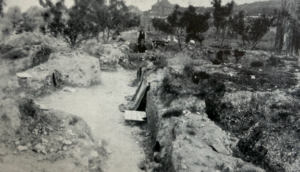
Figure 1. Source: The Sevenoaks Society (1928). Image of the corridor at the Otford villa during excavation. The sacks covered the in-situ painted wall plaster, later lost to frost.
What made the painted wall plaster unusual was the identification of fragments of incised Latin verse alongside figure painting associated with Virgil’s epic poem, Aeneid. This work tells the story of Rome’s foundation by Virgil’s Trojan hero, Aeneas. Written during the beginnings of Rome’s empire under the Emperor Augustus, Virgil’s story is based on Homer’s earlier poetic epic, the Iliad, and tells of Aeneas’ journey from Troy after defeat by the Greeks to build a new city for Troy’s survivors, that of Rome. The significance of identifying this story as the subject matter for the Otford villa’s painted wall plaster is reflected in several fragments which likely relate to either Book I, Book XII, or Book VII. Featuring part of a male figure brandishing a spear in his right hand, and the Latin text of BINA MANU, these fragments were donated to the British Museum in 1928. They remain there on display in the British Museum’s Roman gallery.
But what of the other fragments that were recovered? This led me to consider how much the other excavated material could tell us, not only about how the Otford villa was decorated, but why the story of Aeneas was important enough to be the subject matter for this site. This then raised a further question; who was responsible for this work? Typically, discussion has centred around the owner of the property, yet I was more interested in who undertook the work to bring these stories to life.
My project focus
My project with Maidstone Museum, who were donated the other 37 kilos worth of painted wall plaster from the site, was to look at these fragments. I wanted to understand the skills of the painters, or pictores, who had worked at the villa. One of the notable constraints, aside from the lack of detailed notes from the original excavation, was a lack of precise dating evidence for the lifespan of the villa. Two schools of thought have emerged with the archaeologist J.P. Bushe-Fox, then an Inspector of Ancient Monuments and later excavator of Richborough Roman fort, suggesting that the villa’s occupation ran from the first to the fourth centuries CE (Sevenoaks Society, 1927:7). The second view was that of Pearce (1927:155) who believed that the villa’s occupation stopped at the end of the second century CE. This is despite the presence of third and fourth century coins which may indicate later site usage.
The difficulty with using the information from what is only a partial section of a larger site is evidenced by some of Pearce’s other conclusions. Two mortaria with the potter’s mark of ALPIN.FE or ALPIN. F, were excavated and likely came from St Albans. This is interesting to note as Pearce attributed this to a pottery in Trèves, but a large volume of material has now been collected across Britain to indicate that a potter in St Albans, also called Albinus was making this material and signing his work (London Museum, 2026).
When the villa was abandoned, Pearce believed that this was the result of a fire (1928:162). If this is the case, it is therefore incredibly lucky we have any surviving wall plaster to help us understand how the property was decorated.
The visual effect
So, what may have a visitor to the villa have seen? We know from the excavation notes that visitors will have walked along a painted corridor and seen a series of painted rooms. This is not unusual for buildings owned by higher status individuals and will have conveyed a sense of wealth and importance. Whilst decorative styles are unlikely to determine room usage, they will have been chosen with care to ensure that they made a statement about the owner of the property. Had they studied Virgil’s work or choose from a selection of mythological stories, presented to them as options for the walls of the villa? Did they wish to associate the foundations of their property with that of Rome, a way of connecting the site, in newly conquered Britain with the centre of the empire? Whilst we will never know the answers to these questions, these rooms will have only been seen by invited guests, creating a social barrier with those of lower status.
Imagine as a visitor, being shown into the villa and being taken along the corridor with ‘bands of cream, pink and red, with vertical and horizontal stripes of a darker red’ (Pearce, 1927:53) to one of the painted rooms (fig. 2). Gordan Ward also considered this experience for the visitor, noting the likely exclusion of the indigenous Iron Age Britains who occupied the area before Roman arrival (Ward, 1980: 31). This in turn, again raises the question of who was responsible for the decoration?
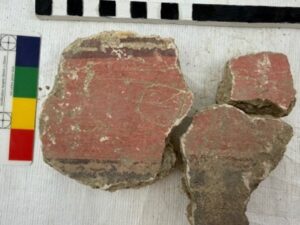
Figure 2. Source: Author (2026). The type of bands of dark red and red that may have been seen by a visitor to the villa.
The artisans
Ward proposed one individual from Rome was the painter, but research since his study enables us to consider that artisans with such skills will have increased in number as the empire expanded and come from different Roman provinces. The diffusion of Roman building styles and techniques, as discussed by the Roman writer Vitruvius, is seen with regional variation in France, Spain and Germany. Styles of Roman painted walls are often discussed in relation to the Four Pompeian Styles, which are series of chronological developments in Roman wall painting, as identified by August Mau. At the Otford villa, if dating is even within the first thirty years of conquest, it would have been built as Vesuvius erupted and therefore subject to the evolution of decorative styles after Pompeii was covered over.
But there is also a question of whether one or many people completed such work in the Darent Valley? General studies of Roman painted wall plaster have tried to answer this question, with several answers proposed. The volume of Roman occupied sites with painted wall plaster may support in the Darent Valley may support the theory that workshops existed with a regular group who went from site to site undertaking the work. The other idea is that independent workers were brought in (Salvadori and Sbrolli, 2021:187). In either scenario the preparation of the walls will have required different skills sets and with some plasterers, or tectores, focused on ensuring the walls were well constructed and smooth enough, whilst specialist pictores created the various forms of decoration.
The preparation of the walls
One of the things I particularly noted about the quality of Otford’s painted wall plaster was how smooth the underlying lime plaster was (Ward, 1980: 28). The only exceptions arose where the plaster had been applied to create a specific texture or was around door frames or window ledges. In these situations, it was often more roughly applied or not rubbed down before the paint was applied, although the decorative style of painting often extended to these areas.
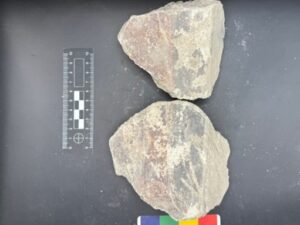
Figure 3. Source: Author (2026). Two fragments of door or window surround. These highlight the continuation of the decorative style but a rougher finish to the underlying plaster.
The plaster covered one or two layers of identified mortar in a variety of thicknesses which may reflect how the walls were built or the phasing construction of the building. Depending on whether the mortar was used on areas of the ceiling or wall construction also determined the type of fabric used, with a distinctive thinner sandy fabric used for the ceiling mortar. The mortar also revealed how the artisan affixed the mortar layers to the underlying wall construction or to one another (fig. 4).
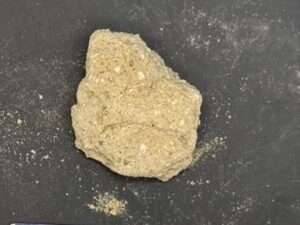
Figure 4. Source: Author (2026). Reverse of painted wall plaster to show the use of fixing lines to help adhesion. This fragment shows a matrix mix of sandy, chalk nodules and grit inclusions.
Some of the smoothness of finish will also be reflected in the way the paint was applied, also demonstrating another talent of the pictores. Many of the fragments indicate the application of paint used the method of ‘frescoing’ (Salvadori and Sbrolli, 2021:187). which has enabled us to view the paint today. The pictores will have applied the multiple layers of paint whilst the plaster was still wet, with the plaster absorbing the pigmentation of the paint as it dried. To highlight this, I have included a filtered image of a fragment which had conservation paint added to it by the original excavators. The filtered version enables us to further see the various layers of paint below the conservation layer. The pinkish red paint was applied over a base white layer. The other yellow, then pink and red bands of paint were added before the more detailed design. The vertical yellow band may have been top part of a candelabra or pillar design, with some form of black drapery hanging downwards. We can identify that the yellow band was painted before the lighter pink on the left because the outline of the yellow band can be faintly seen below.
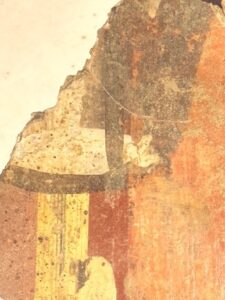
Figure 5. Source: Author (2026). Filtered applied to understand the layers of paint absorbed into the plaster, with the addition of later decorative images.
The specialist decorative styles – figures
As already indicated, different styles have been used at the Otford villa and research has suggested that specialist pictores will have been used to execute those styles. As noted, at least one painted wall panel related to the Aeneid. My research of the wider collection has revealed that more than one panel had painted figures and that these came from different walls. This was determined by the use of different mortar fabrics as well as the observation by the original excavators who described figures of ‘men, barbaric and otherwise’ (Sevenoaks Society, 1927, p.3). Whilst we may not describe the figures using similar terms now, this provides us with an insight into what the original excavators saw. Salvadori and Sbrolli (2021: 187) consider the figure painter, or pictor imaginarius, to have been the most skilled of all the artisans who would have been brought in only to create these images. The basis for these figures has been long debated, with general agreement that potential reference or sketch books were used to accurately create the figures. With preliminary sketches used to outline the figures, the artisan would then have been able to check the scale and proportion of their designs. The Otford figures clearly show how shades of red outlines were used to define the figures on different coloured backgrounds.
The Maidstone Museum collection has revealed a series of torso and limb fragments which are in addition to those on display there. The variety of paint styles, backing mortars and colour schemes indicates that figure painting was a key feature of the decoration.
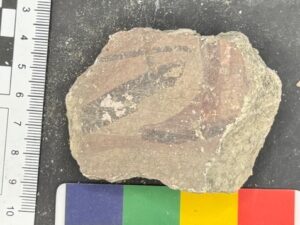
Figure 6. Source: Author (2026). The foot of an unknown painted figure.
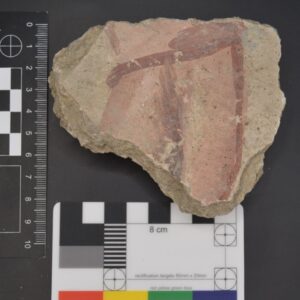
Figure 7. Source: Author (2026). Torso of an unknown figure with a belt.
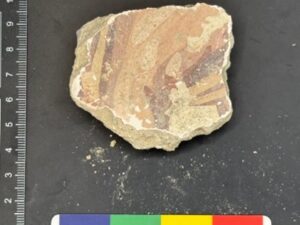
Figure 8. Source: Author (2026). Possible arm or leg of a figure.
As well as human figures, there are two fragments relating to the image of a bird which may indicate that a landscape scene featured in the decorative scheme.
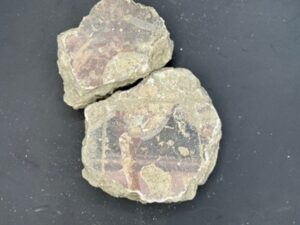
Figure 9. Source: Author (2026). Possible bird leg and body.
The specialist decorative styles – motifs, landscapes and perspectives
The evidence from the House of the Painters at Work in Pompeii, has indicated how teams of pictores may have worked together and how different groups were responsible for specific decoration. As well as the specialist figure painters, the Otford villa likely required specialists in landscape and wall decoration, or the pictores parietarii, who set out other aspects of the design.
The fragments at Otford have revealed how motifs were created and notably the use of compasses to create wheel-like, or roundel, designs (Davey and Ling, 1982: 153). The compass point in the below image (fig. 10) is clearly visible at the centre of the floral rosette. It is likely that the compass made both the inner and outer circular marks. Several fragments were identified to complete this design.
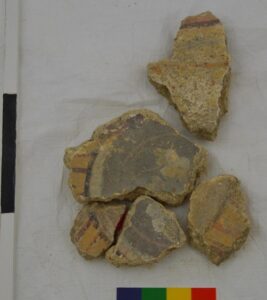
Figure 10. Source: Author (2026). Wheel-like motif with compass point at the centre of the floral rosette.
The use of frames, doorways and windows has also been noted in the collection. These will have created perspective and distance on the walls rather than solely a two-dimensional image. The images below (fig. 11 and fig. 12) highlight how this was used in different ways. The viewer of the walls at the Otford villa will have seen scenes within scenes. Figure 11 demonstrates this with a garden scene beyond that of a white-framed window.
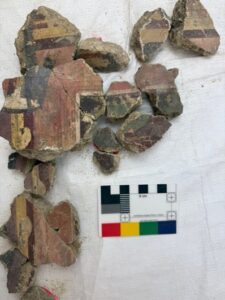
Figure 11. Source: Author (2026). A window framing a potential garden scene beyond.
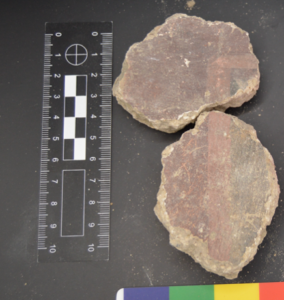
Figure 12. Source: Author (2026). Use of architectural style and perspective. The image shows two fragments which are either an open door or window.
The specialist decorative styles – dipinti or incised verse
One of the most notable features of the Otford villa painted wall plaster has been the identification of a phrase from Virgil’s Aeneid. As has been noted, the survival of Roman painted wall plaster has not always occurred and even where it has it is often under-studied after excavation (Ling, 2007:63). The presence of lines of Latin verse means that the pictores at Otford not only had to ensure that the walls were decorated with motifs, figures, panels, stripes and landscapes but also precisely execute the words of Virgil.
My study of the collection at Maidstone Museum has identified more lettering and importantly two consecutive lines of verse. Based on evidence to date, the survival and identification of this textual material is unusual in Roman Britain. As discussed by Ling (2007:63) the literacy levels of people in Roman Britain are unknown. As a result, we cannot know if the pictores copied these verses from a reference catalogue. Similarly, we do not know if they understood the significance of the verses and relationship with the decoration. What we can determine is their precision, seen in the surviving incised guidelines they used to ensure the spacing and layout of the letters was clear. We lack the ability to know which decorative images these verses went with, but their presence indicates that the walls of Otford represented more than more verse of writing, and of a different background to those in the British Museum. Further research of this text will follow.
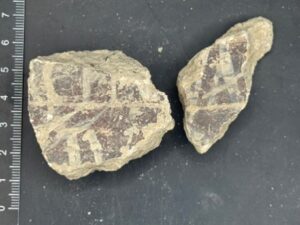
Figure 13. Source: Author (2026). Fragments of Latin verse, including over two lines. Several letters and may include C, H, or I, N, A, V.
Reassembling the fragments
As well as trying to understand the techniques used by the painters at the Otford villa, I did attempt to recreate some of the potential panels (fig. 14). I note that my attempts can be challenged and certainly more time would have enabled more consideration of the colour schemes which abutted one another, as well as central designs. Therefore, and despite potential inaccuracies does highlight the complexity of just one area created in a wall design but also the size. Helpfully, other similar fragments glued together by earlier excavators did give me a head start and are on display in Maidstone Museum’s Lives in Our Landscape gallery.
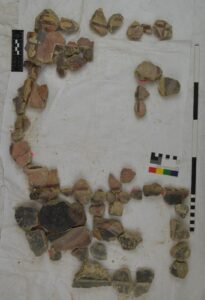
Figure 14. Source: Author (2026). Large panel design of a window with landscape. Below is a series of smaller panels which have alternative decoration styles.
I owe a great deal of thanks to the Collections Team at Maidstone Museum for enabling me to spend time with this wonderful, excavated material culture from the Roman era of Britain. The fact that excavations at this site took place one hundred years ago was not lost on me, nor was the fact that a talented group of artisans worked to create such decoration over 1,800 years ago. The fact that we can understand their methods and admire their creativity today is quite amazing.
Suggested further reading:
For the Otford villa
For information concerning the dipinti or inscribed verse:
Roman Inscriptions of Britain (2024). RIB 2447.9. Wallplaster | Roman Inscriptions of Britain. [online] Romaninscriptionsofbritain.org.
For the fragments held at the British Museum:
https://www.britishmuseum.org/collection/object/H_1928-1011-1
For Virgil’s Aeneid
There are several translations of Virgil’s Aeneid available. The two I have found useful are:
Robert Fagles, Penguin Classics, Penguin Books
Sarah Ruden, Yale University Press
For painted wall plaster
Wall-Painting in Roman Britain by Norman Davey and Roger Ling
Art in Britain Under the Romans by J.M.C Toynbee
Bibliography
Davey, N. and Ling, R. (1982). Wall-painting in Roman Britain. London: Society for the Promotion of Roman Studies.
Ling, R. (2007). Inscriptions on Romano-British Mosaics and Wall-Paintings. Britannia, 38(38), pp.63–91. doi:10.3815/000000007784016395.
Pearce, B. (1927). Roman Site at Otford. In: Archaeologica Cantiana. Kent: Kent Archaeological Society, 39, pp.153–155.
Pearce, B. (1928). The Roman Site at Otford. In: Archaeologica Cantiana. Kent: Kent Archaeological Society, 41, pp.157–161.
Salvadori, M. and Sbrolli, C. (2021). Wall paintings through the ages: The roman period—Republic and early Empire. Archaeological and Anthropological Sciences, 13(11). doi:10.1007/s12520-021-01411-3.
The Sevenoaks Society (1927). Roman Otford. A short account and appeal. Kent Messenger, pp.1–8.
The Sevenoaks Society (1928). Report of the Excavation Committee of the Sevenoaks Society on the Roman Site at Otford. Ashford: Headley Brothers.
Toynbee, J. (1964). Art in Britain Under the Romans. Oxford: Oxford University Press, pp.373–374.
Ward, G. (1931, reprinted 1980). Sevenoaks Essays. Ashgrove Press.