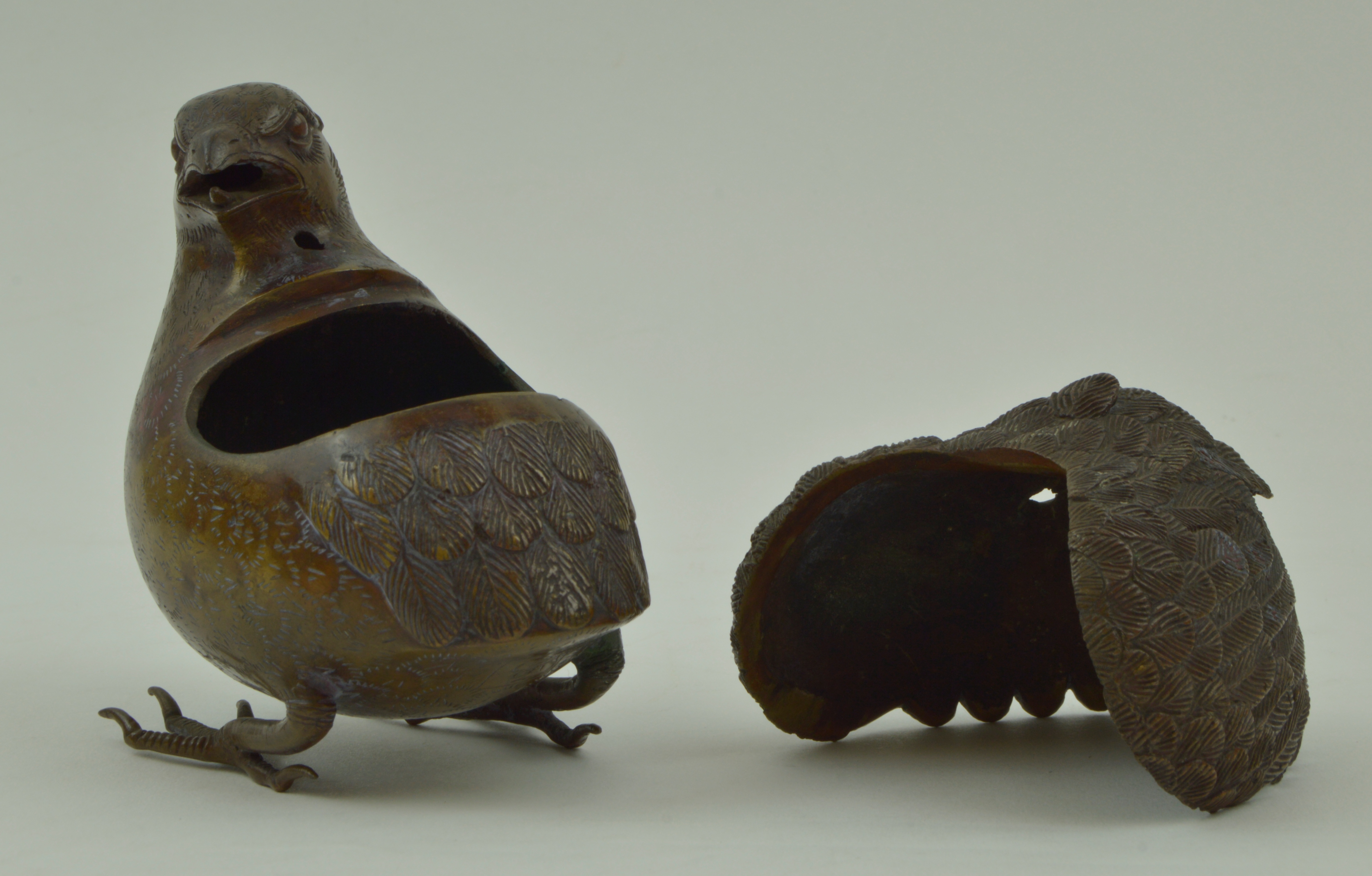
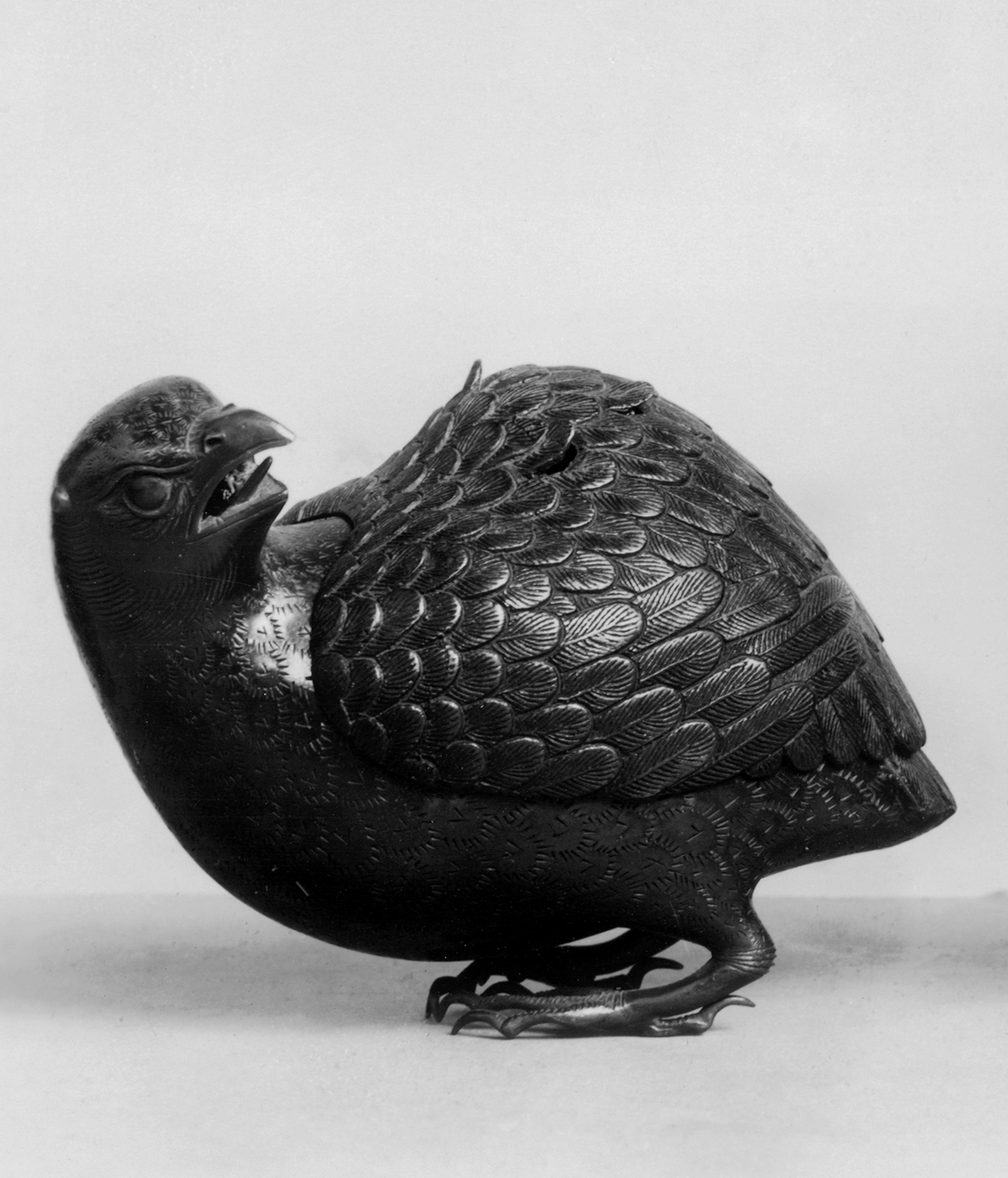
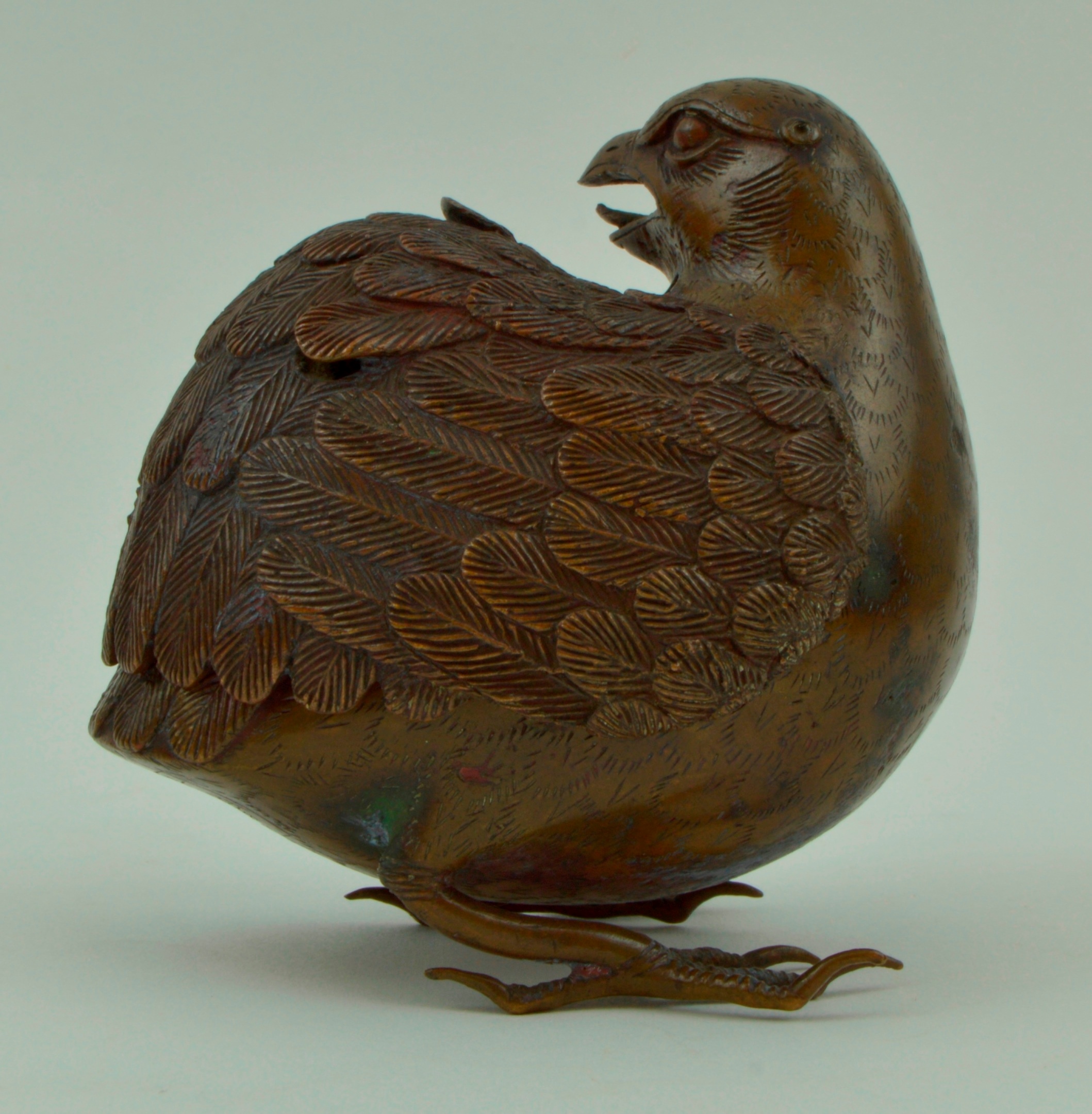
Kamejo’s work is unusual because it provides us with an example of bronze ware that was made for the Japanese domestic market, rather than as an export ware produced for western consumption.
Kamejo’s quail also demonstrates the high quality of metal ware produced during the Edo period (1600-1868) and the taste for naturalist detail in the applied arts.
Under the ruling Tokugawa family, the feudal system that organised society into four status groups (samurai- farmer-artisan-merchant) meant that craft-based industries were hereditary occupations that passed through a family line. While it is known that women were involved in textile manufacture and processing, it is refreshing to find evidence of female involvement in the bronze casting industry.