Celebrating International Women’s Day, we are looking at how women are represented through Maidstone Museum’s collection of over 700 Japanese, Edo period woodblock printed images and books. Women and femininity could be interpreted very differently, with an insight into the gender politics of the culture at the time.
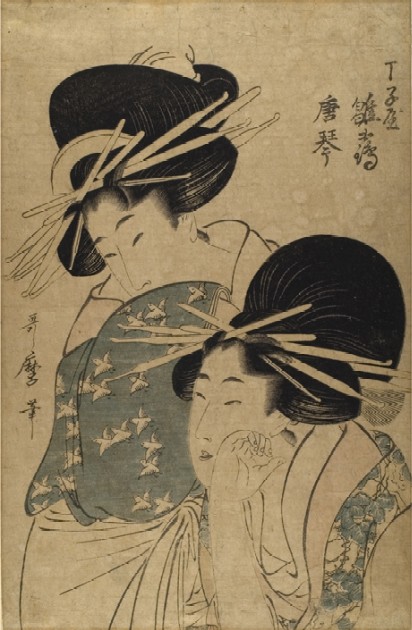
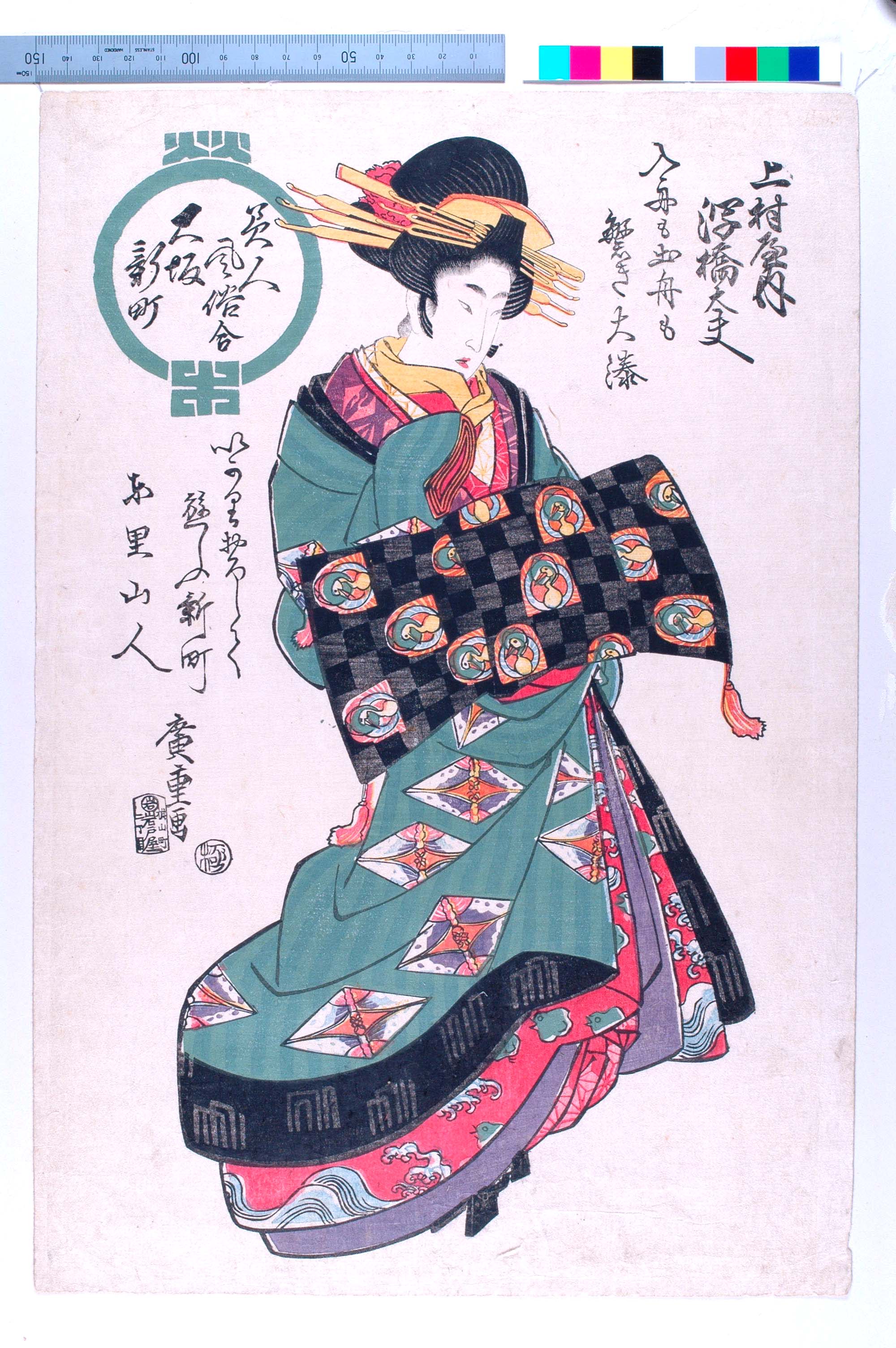
In the Japanese woodblock print tradition of ukiyo-e (floating world), women are most commonly represented in the Bijin-ga (beautiful women) genre. These were often courtesans; beautifully depicted with elaborate hair styles, heavy make-up, and decorative clothing. They were considered the ‘ideal woman’; as well as beautiful they were passive, attentive, educated and well-trained in the entertainment of male companions. The famous artist, Kitagawa Utamaro (1753 – 1806), is well known for his works in the genre. In his later years Utamaro became captivated by the courtesans and bijin of the Yoshiwara district. He made their faces the focus of the print, often picturing them from the side in a bust portrait known as an okubi-e. He concentrated on expressing the emotion, beauty and character of the ladies portrayed. As he does here: