23rd February 2017
Older People in Museums
Ageing in the Ancient Civilisations Gallery Project
Low Season (Term Time)
(Following KCC’s published school term dates)
Open: Wednesday to Saturday / 10am – 4pm (Last entry: 3.30pm)
Closed: Sunday – Tuesday
High Season (Term Time)
(Following KCC’s published school term dates)
Open: Tuesday to Saturday / 11am – 5pm (Last entry: 4.30pm)
Closed: Sunday – Monday

Ageing in the Ancient Civilisations Gallery Project


Museums tend to value age – particularly in our objects – and we try to appeal to a broad range of ages in our visitors. We also value the contributions and experiences of our volunteers both young and old, yet there is seldom much debate regarding ageing to be overheard in the galleries. In museums it is your interests rather than age that matter in terms of what you choose to look at and engage with.
However, next time you visit us, you could look out for an object that you relate to because of your age or that you engage with differently at your current age than you did when you were younger. Regardless of age, your perception changes over time.
I have taken this blog as an opportunity to share my own changes in interpretation. I now relate differently to the hydra fragment because of the work we have done has made me more aware of depictions of older people. I also engage with Ta-Kush differently as I previously thought I had lived beyond the age she was when she died, yet it now transpires that she has lived beyond my age. This finding brings a different perspective.
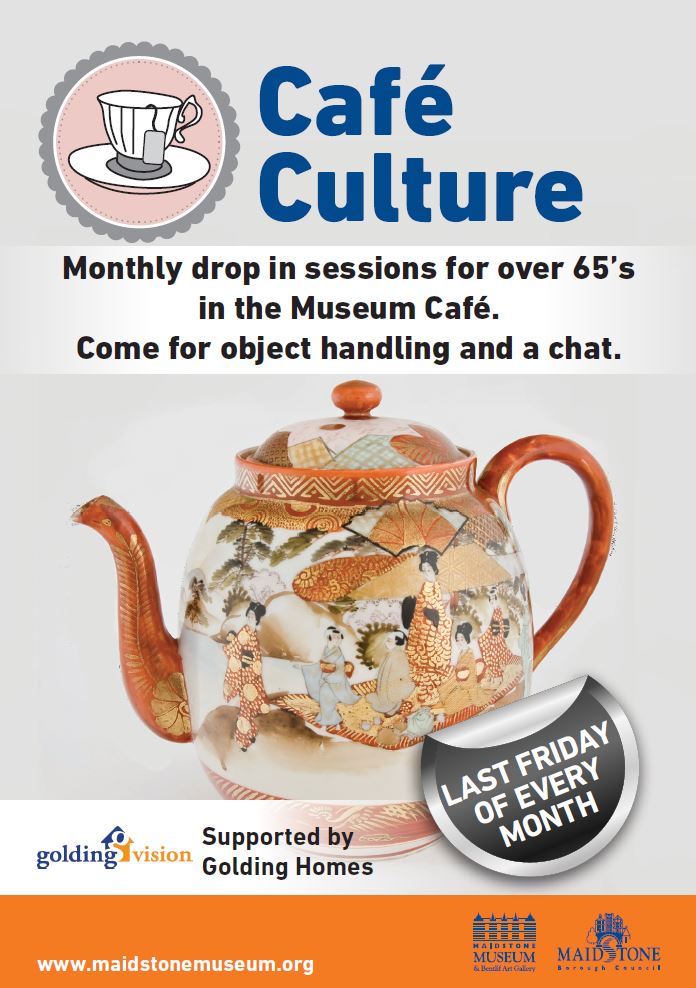
If you or someone you know is interested in joining Café Culture, please just drop into the museum café on the last Friday of the month from 10.30-11.30am. If you would like more information, please call today on 01622 602853 or 01622 602854.