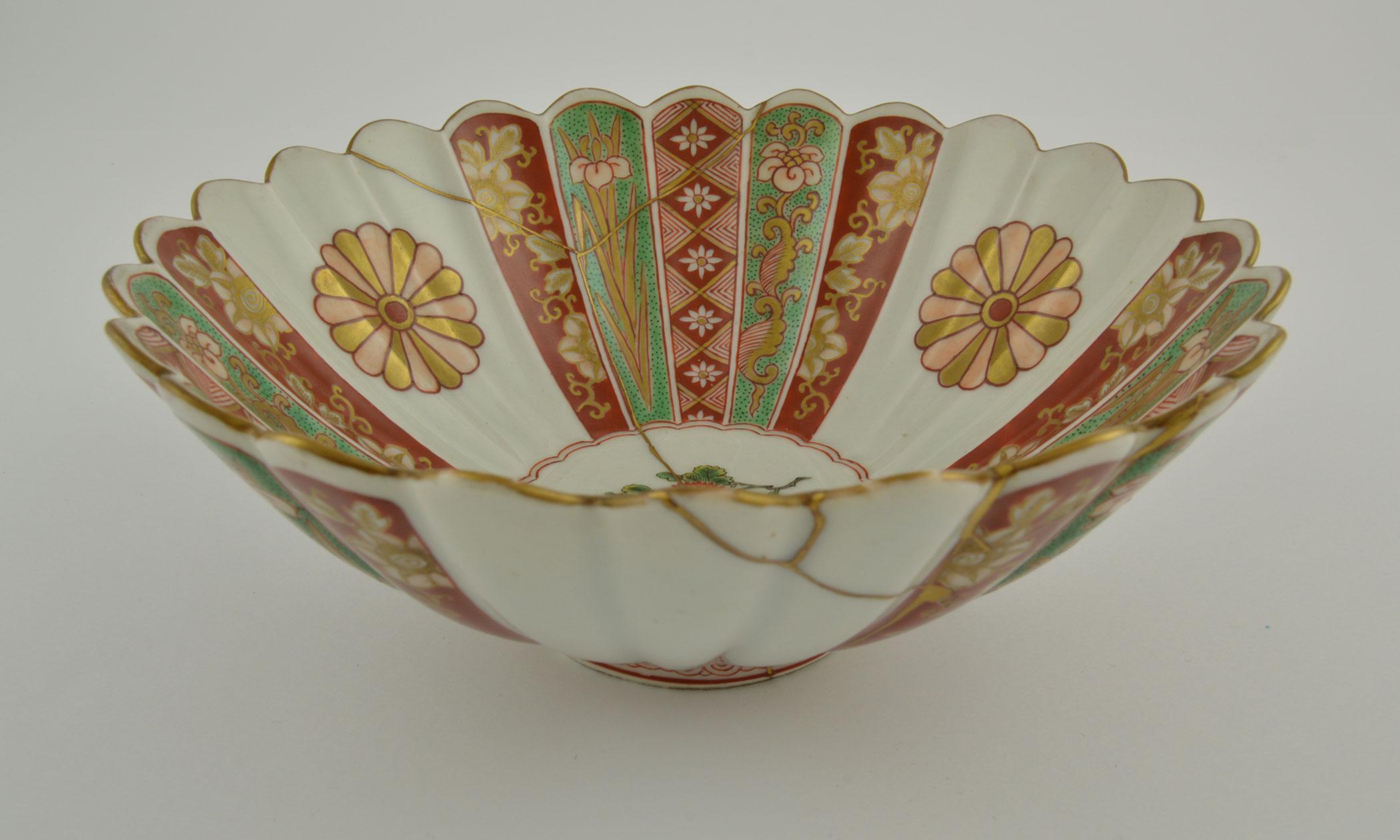
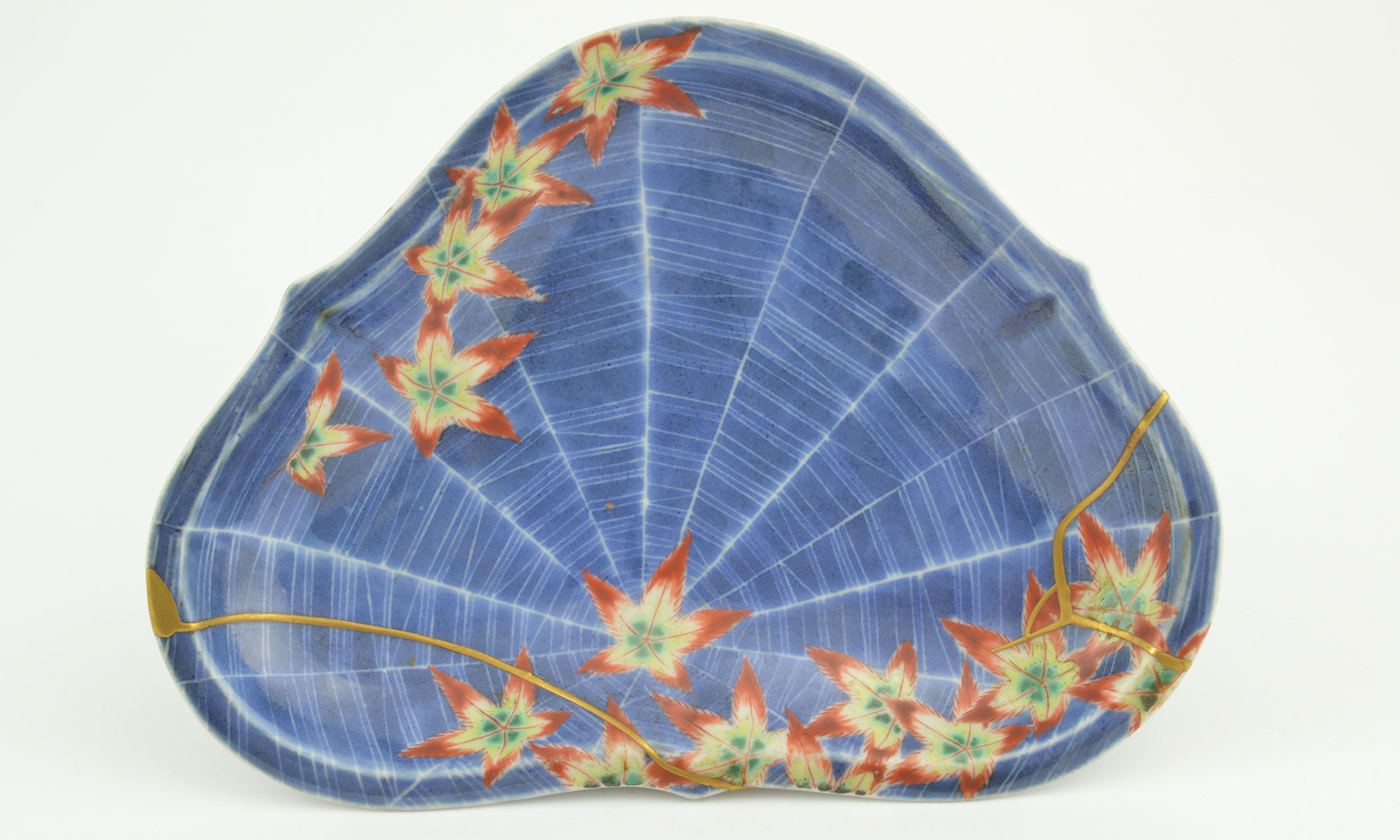
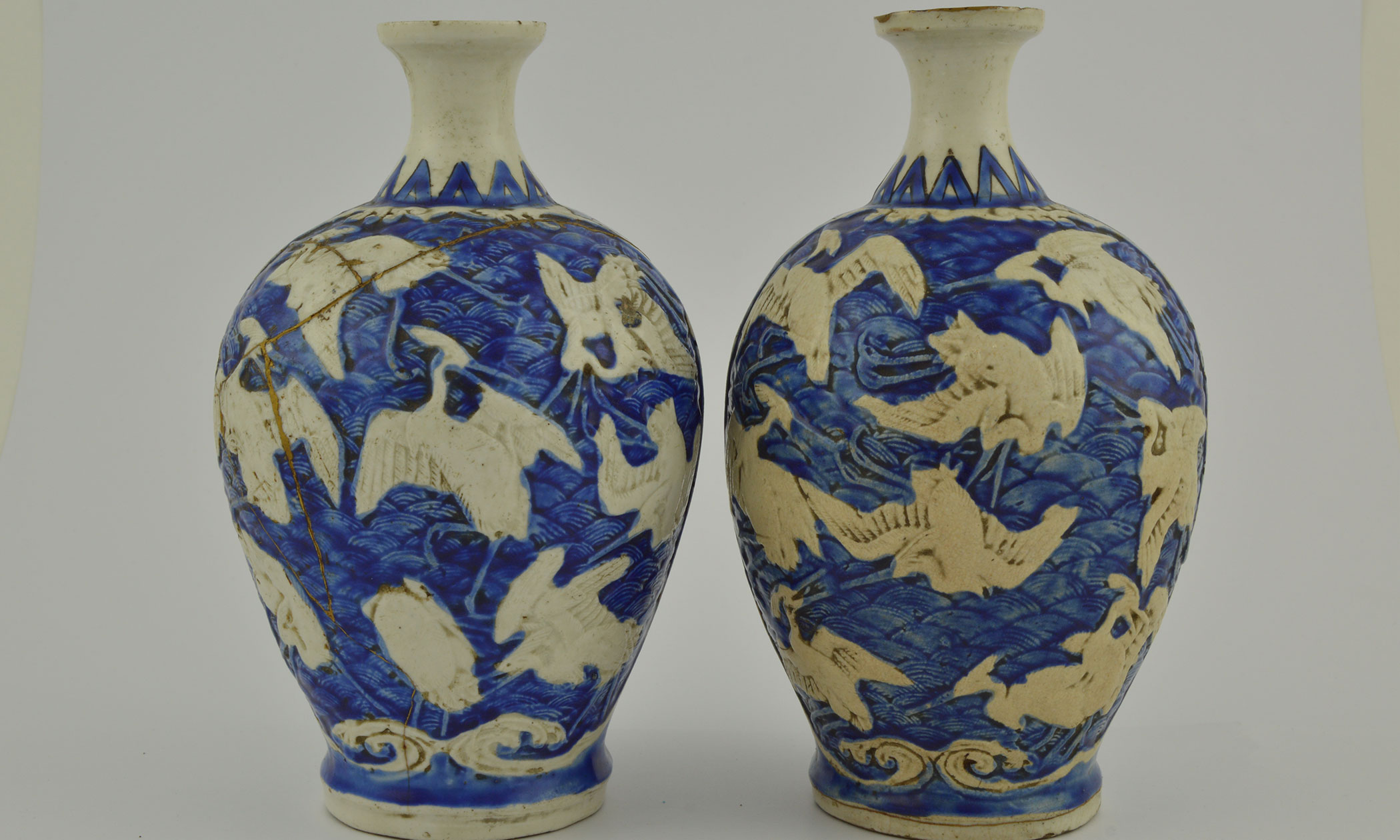
What does it mean when something breaks? For Western cultures it may signify a time for change or upgrade. But, for the Japanese practice of Kintsugi, proudly wearing the scars of aging and wear means embracing transition and acknowledging of the impermanence of life. Sam Edgley provides a fascinating insight into the practice.
In January 2006, a man was visiting the Fitzwilliam Museum in Cambridge. As he began to descend the staircase, he tripped on his untied shoelace. As he began to fall, he instinctively grasped out, accidently knocking over three valuable vases in the process. The incident led to the man and the three vases, tumbling to the bottom of the stairs.
Despite being shaken, the man was not badly injured and was soon back on his feet. The vases, however, were not so resilient and shattered into pieces. The incident was widely described as being a ‘disaster’ and restorers set to work – attempting to restore the vases in a way that would minimise any signs of the incident. The idea of putting the vases back on display, without making every effort to reduce the visible signs of damage upon them, would probably be unthinkable for the majority of Western museums and gallery visitors. However, there is an alternative approach.
In Japanese culture, there is a term called Kintsugi, which means golden joinery. It is a method utilised for repairing broken objects. Rather than attempting to hide the damage, Kintsugi actually draws attention to the cracks and the chips, and perceives these marks of wear and tear as a valuable addition to the story of the object. The technique uses a special lacquer which can be mixed with gold, silver, or platinum. This lacquer fixes the object, but in a way that highlights (rather than hides) the damage, and in the process it creates an aesthetically beautiful effect.
In Western culture, we tend to believe that if an object cannot be mended to look almost identical to the way it did prior to being damaged, the attempts to fix it have failed. In addition, there’s the opinion that the items significance is lessened. As such, we aim to ‘restore’ items and artwork.